
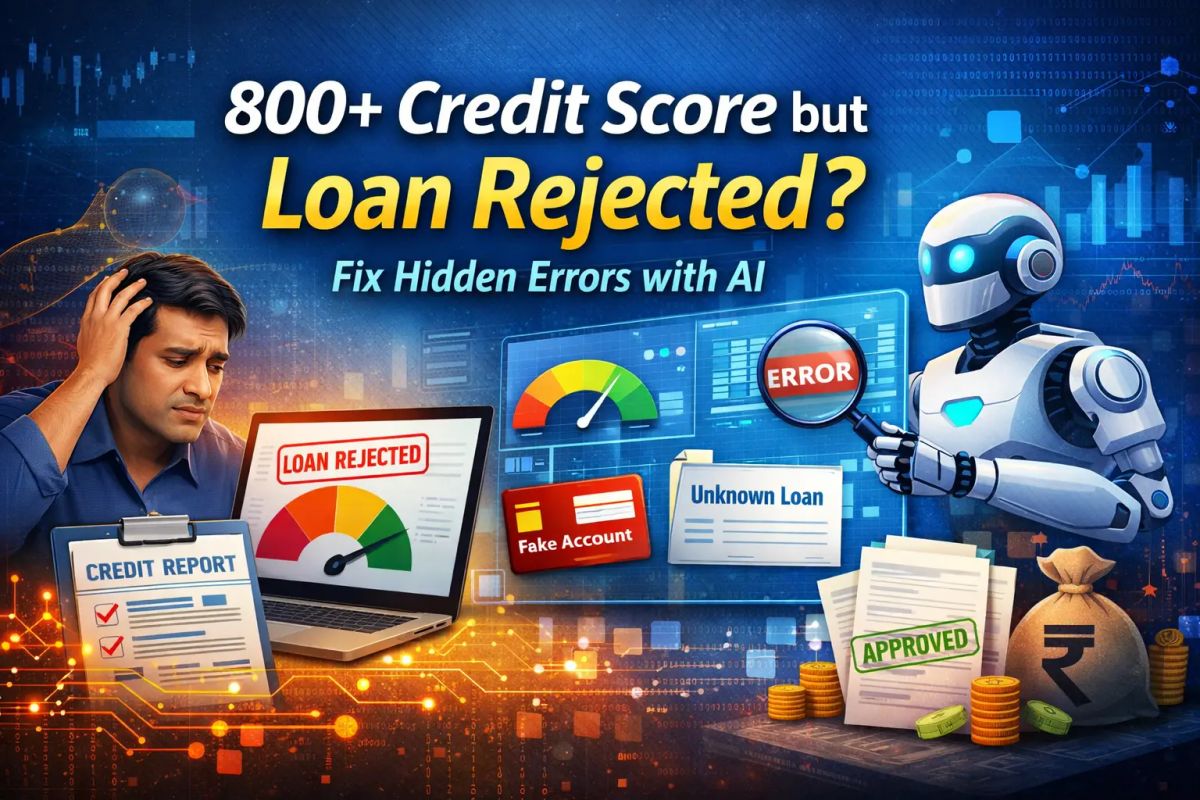
In today’s financial world, your credit score matters as much as your savings. When you apply for a home loan, personal loan, or new credit card, lenders want to see how reliable you are in repaying debt. They measure this reliability through your CIBIL score, which is a three-digit number that shows your creditworthiness.
To maintain good financial health, it’s essential to know how to check your credit score regularly and adopt smart habits to improve it. In this guide, we’ll cover:
- What is a CIBIL score?
- How to use a credit score checker?
- Does Checking Your CIBIL Score Affect Your Credit Score?
- The difference between free and paid score checks?
- Tips to increase your CIBIL score?
What is a CIBIL Score?
Your CIBIL score is a three-digit number ranging from 300 to 900. It checks user creditworthiness. Your CIBIL score, derived from your credit history, helps banks and financial institutions assess your creditworthiness before approving loans or credit cards. A higher score makes it more likely that lenders will approve your loan or credit application easily. A Low Credit Score decreases your loan approval chance.
Excellent: 750 to 900
Good: 700 to 749
Average: 650 to 699
Poor: 550 to 649
Very Poor: 300 to 549
Lenders typically look for a score of 750 or more. If you're unsure of your current score, you can easily check it using a free credit score checker online.
How to Check Credit Score
Many online tools are available in the market to generate a credit report. You can use anyone to know your score, but here’s a trusted method:
Step 1: Visit the Official CIBIL Website
Go to https://www.cibil.com, the official site for a CIBIL report checker.
Step 2: Select the Free Credit Score Option
CIBIL offers one free credit score check each year. You’ll also receive a free credit score report. For more frequent updates, you can choose their paid subscription.
Step 3: Fill Out Your Details
You’ll need to provide:
Name (as per PAN card)
Date of Birth
Gender
PAN Card Number
Email ID and Mobile Number
These details will help create your CIBIL report.
Step 4: Verify Your Identity
You’ll answer several security questions about your past loans or credit cards.
Step 5: Get Your Score and Report
Once verified, you’ll see your score immediately. You’ll also receive a copy of your free credit score report in your email.
Other Ways to Use a Free Credit Checker
Besides the official CIBIL website, you can also use:
Bank websites and apps (many banks provide free credit score checkers)
Third-party financial platforms like Paisabazaar, BankBazaar, and Samridhya Credit Score Checker Tool.
You can use our tool, it's free, and it doesn't affect your Credit score.
These services often include a credit score checker with detailed insights into your borrowing history.
Why Should You Use a Credit Score Checker?
Checking your credit score regularly helps you:
You can monitor your financial health.
Identify errors in your report
Stay aware of your financial status
Track your progress when attempting to improve your score
Avoid loan rejections due to surprise low scores
You can make an informed decision
Improve your credit score
You can limit Hard Enquiry
Keep in mind that using a free credit checker or a CIBIL report checker is a soft inquiry. It won’t affect your score.
Does Checking Your CIBIL Score Affect Your Credit Score?
No, checking your own CIBIL score does not affect your credit score. When you check it yourself, it is considered a soft inquiry, which has no impact on your credit rating. This is completely safe and recommended, as it helps you monitor your financial health. However, when banks or lenders check your CIBIL score during a loan or credit card application, it is treated as a hard inquiry. Multiple hard inquiries within a short period can slightly lower your score. Therefore, regularly checking your own Credit Score is a smart way to stay informed without harming your creditworthiness.
The difference between free and paid score checks:
A free CIBIL score check allows you to view your credit score without any cost, usually once a year. Many financial platforms and CIBIL itself provide this option so you can keep track of your credit health without paying. However, these free checks often come with limited details about your credit report.
On the other hand, a paid CIBIL score check gives you full access to your credit report along with detailed insights. This includes information about your credit accounts, repayment history, credit utilization, and factors affecting your score. Paid reports also often come with personalized recommendations to help you improve your creditworthiness.
In short, free checks are great for a quick update on your score, while paid checks give a deeper, more detailed understanding of your credit profile, which can be helpful if you are planning a major loan or credit application.
How to Increase Your CIBIL Score
You can improve your score through consistent financial discipline. Here’s how:
1. Pay EMIs and Bills on Time
Repayment history is the most significant factor. Always pay your credit card bills and loan EMIs before the due date.
2. Keep Credit Utilization Below 30%
A credit score checker looks at how much of your available credit you use. Spending less than 30% of your limit is best.
3. Avoid Multiple Loan Applications
Each loan or credit card application triggers a hard inquiry. Too many at once will lower your score.
4. Maintain Old Accounts
Don’t close old credit cards with a good repayment history. They lengthen your credit history and can boost your score.
5. Diversify Your Credit Mix
A mix of secured (home or car loans) and unsecured credit (personal loans, credit cards) strengthens your profile.
6. Monitor Your Report Regularly
Use a CIBIL report check or other credit score checker tools to find errors like:
Wrong account details
Loans you didn’t take
Payments are incorrectly marked as late
If you find mistakes, dispute them with CIBIL right away.
7. Negotiate for a Higher Credit Limit
Ask your bank to raise your credit limit. A higher limit helps reduce your utilization ratio and improves your score.
8. Never Settle Loans
Settling a loan by paying less than what you owe negatively impacts your score. Always aim for full repayment.
9. Borrow Responsibly
Avoid taking loans you can’t repay. A credit report checker includes all missed payments, hurting your credibility.
10. Be Patient
Improvement takes time. Regularly using a credit score checker will help you monitor your progress.
Final Thoughts
Your CIBIL score represents your financial reputation. Regularly using a credit score checker or a CIBIL report checker keeps you informed about your financial standing. A good score leads to faster loan approvals, lower interest rates, and better credit products.
To recap:
Use a free credit score checker online to stay updated.
Always pay bills on time.
Keep utilization under 30%.
Avoid multiple credit applications.
Monitor your free credit score report regularly.
Practicing financial discipline today ensures your financial freedom tomorrow. Use tools like a free credit checker and a CIBIL report check to stay in control of your financial journey.
FAQ's
1. What is a CIBIL score and how is it calculated?
A CIBIL score is a three-digit number ranging from 300 to 900 that reflects your creditworthiness. It is calculated based on your credit history, including repayment behavior, outstanding debt, credit mix, and the number of recent credit inquiries. A higher score signals to lenders that you are financially responsible, making loan approvals easier and interest rates lower.
2. How can I check my CIBIL score for free?
With the Samridhya Credit Score Tool, you can check your CIBIL score online for free anytime. Simply visit the Samridhya website, enter your details securely, and get your score instantly. It’s safe, easy, and doesn’t affect your credit rating. This makes it a trusted option for monitoring your financial health without extra cost.
3. Does checking my CIBIL score affect my credit score?
No, checking your own CIBIL score is called a soft inquiry and does not impact your credit rating. Only hard inquiries — made by lenders during loan or credit card applications — can affect your score, and even then, the impact is usually small. Regularly checking your score is safe and recommended to maintain financial awareness.
4. What is the ideal CIBIL score for loan approval?
A CIBIL score above 750 is considered excellent and greatly improves your chances of loan or credit card approval. Scores between 700 and 749 are considered good, while scores below 650 may make it harder to secure loans or attract competitive interest rates. Keeping your score high is essential for better financial opportunities
5. How can I improve my CIBIL score?
Improving your CIBIL score requires consistent financial discipline. Key steps include paying your EMIs and bills on time, keeping your credit utilization below 30%, avoiding multiple credit applications at once, and maintaining old accounts with good repayment history. Regularly checking your credit report for errors and resolving them can also boost your score over time.
6. Is it safe to check my CIBIL score online?
Yes. Samridhya uses secure technology to ensure your personal information stays private. Checking your CIBIL score through Samridhya is safe, quick, and reliable. You don’t have to worry about your score being affected — it’s designed for your convenience and peace of mind.
7. Can I get a loan with a low CIBIL score?
While a low CIBIL score can make loan approval more challenging, some lenders still consider such applications, especially if you have a stable income and a good banking relationship. However, you may face higher interest rates and stricter terms. Improving your score beforehand can significantly improve your chances.
8. How often should I check my CIBIL score?
It’s a good practice to check your CIBIL score at least once a year to monitor your financial health. If you plan to apply for a loan or credit card, checking it more often helps ensure your score is in good shape and gives you time to fix any errors before applying.
9. What factors affect my CIBIL score?
Your CIBIL score is influenced by multiple factors: payment history (35%), credit utilization ratio (30%), length of credit history (15%), types of credit accounts (10%), and recent credit inquiries (10%). Keeping a clean repayment history and low utilization ratio has the biggest positive impact.
10. Can I improve my CIBIL score quickly?
Improving your CIBIL score is possible, but it takes time. While small improvements may appear in a few months, significant changes usually take six months to a year. Regularly paying bills on time, reducing outstanding debt, and monitoring your credit report are proven strategies for long-term improvement.
Ready to compare real offers?
One application. 10+ RBI-registered lenders. Free for borrowers.